Address
304 North Cardinal St.
Dorchester Center, MA 02124
Work Hours
Monday to Friday: 7AM - 7PM
Weekend: 10AM - 5PM

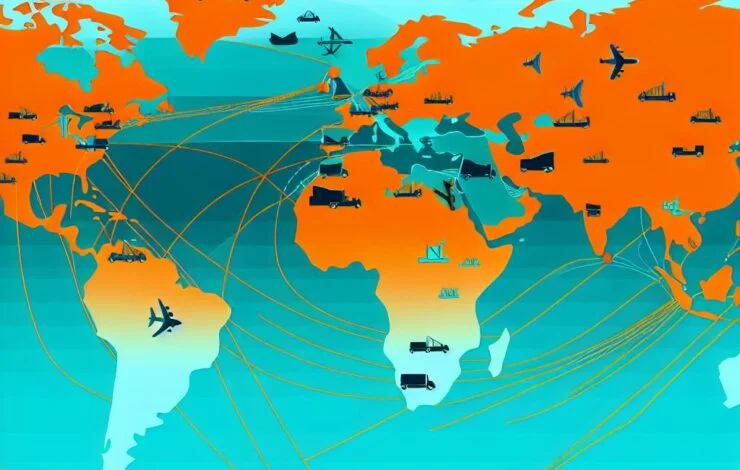
The Middle East plays a vital role in international shipping, connecting major markets across Asia, Europe, and Africa. Its strategic location, modern ports, expanding airport infrastructure, and integrated transportation networks make the region an important gateway for global trade.
For businesses seeking efficient international shipping solutions, the region offers valuable opportunities to streamline cargo movement, improve connectivity, and support reliable delivery.
The Middle East connects major global trade routes and supports the movement of goods between key manufacturing centers and consumer markets. Continued investment in ports, airports, road networks, and logistics facilities has strengthened the region’s role in international freight transportation.
Key advantages include:
Strategic global connectivity: Access to major markets across Asia, Europe, and Africa.
Modern logistics infrastructure: Advanced cargo-handling facilities and warehousing services.
Multiple shipping options: Air freight, ocean freight, and road transportation.
Efficient cargo coordination: Opportunities to streamline transfers, customs procedures, and onward delivery.
Several locations across the Middle East support international cargo transportation and regional distribution.
Dubai is a major international logistics center, supported by Jebel Ali Port, Dubai International Airport, and Al Maktoum International Airport. These facilities connect international shipping routes and provide access to air cargo, container shipping, warehousing, and distribution services.
Abu Dhabi continues to develop its transport and logistics infrastructure, supporting international cargo operations and regional trade. Its ports and airport facilities contribute to connections with markets across the Gulf, Asia, and Africa.
Saudi Arabia is investing in ports, airports, road networks, and logistics zones to strengthen domestic transportation and international trade. Major gateways, including Jeddah and Dammam, support cargo movement through the Red Sea and Arabian Gulf.
The Port of Salalah occupies a strategic position along important maritime routes connecting Asia, the Middle East, Europe, and East Africa. Its location supports container transshipment and international cargo distribution.
Choosing the appropriate shipping method depends on the shipment’s size, destination, budget, and delivery deadline.
Air freight: Suitable for urgent shipments, high-value goods, and time-sensitive cargo requiring faster transportation.
Ocean freight: Often more economical for large, heavy, or bulk shipments where longer transit times are acceptable.
Road freight: Supports regional distribution, cross-border transportation, and connections between ports, warehouses, and final destinations.
A well-planned multimodal shipping strategy can combine these options to meet specific business requirements.
Selecting a reliable logistics partner is essential for managing international shipments effectively. Businesses should consider global network coverage, transparent pricing, customs expertise, shipment tracking, and responsive customer support.
It is also important to compare service-specific transit estimates. Delivery times vary according to the origin, destination, carrier, customs procedures, and available transportation connections.
Major international express carriers, including DHL, FedEx, and UPS, offer expedited shipping services to many destinations. The most suitable provider depends on the specific route, service level, and delivery requirements.
Continued investment in logistics infrastructure, digital customs processes, cargo-handling technology, and multimodal transportation is helping strengthen the Middle East’s position in global trade.
These developments create opportunities for businesses to improve supply chain visibility, coordinate international shipments, and access new markets. However, actual delivery performance depends on route availability, operational conditions, and destination-specific requirements.
The Middle East remains an important gateway for international shipping, offering strategic connections between Asia, Europe, and Africa. Major logistics hubs such as Dubai, Abu Dhabi, and Saudi Arabia support global cargo movement through established air, sea, and land transportation networks.
At Globex Logistics International, we understand the importance of choosing appropriate shipping routes and coordinating every stage of the delivery process. Our air freight, ocean freight, trucking, and door-to-door logistics solutions help businesses explore practical options for moving shipments across borders.
Contact Globex Logistics International to discuss your shipping requirements and find a logistics solution tailored to your business.
